Multi-Purpose Building
The Project
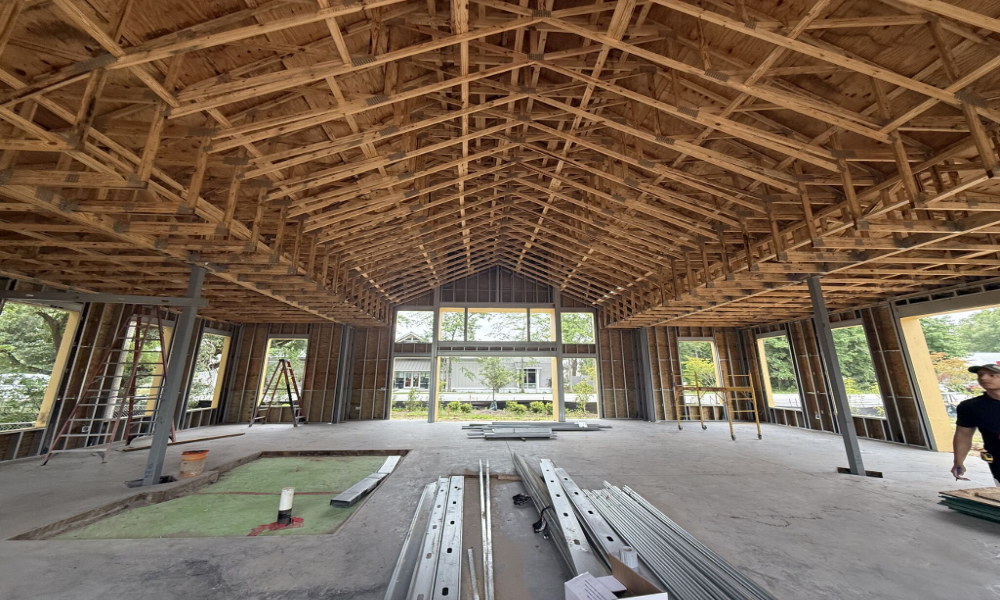
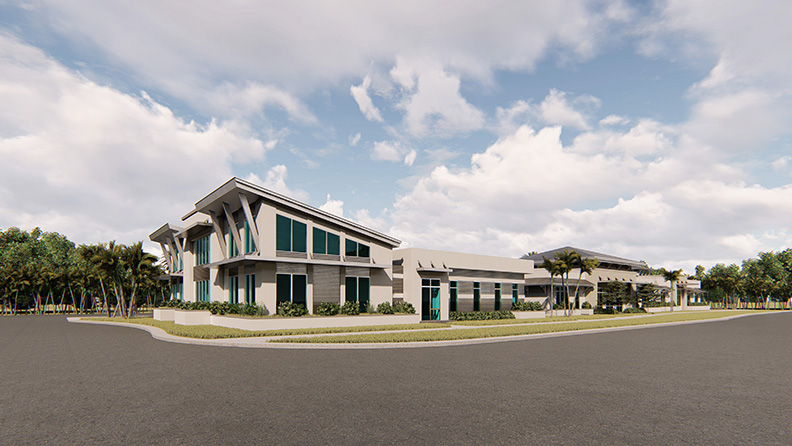
This project involves the design of a new Multi-Purpose Building, serving as a gymnasium and activity center for a church in Camden, South Carolina. While the core of the structure is a Pre-Engineered Metal Building (PEMB)—chosen for its cost efficiency and large clear spans—the design is far from a standard “metal box.” To meet the church’s functional and aesthetic needs, the building is heavily “modded” with a variety of conventional construction elements, transforming a simple industrial shell into a welcoming community facility.
The Client
The church required a facility that was affordable but did not look or feel “cheap.” While a PEMB was the logical choice for the main volume, they needed specific features—like a mezzanine and a welcoming entry—that the metal building manufacturer could not provide cost-effectively or aesthetically. They needed an engineering partner with a “Swiss Army knife mentality,” capable of integrating multiple material types into a single cohesive design.
The Challenge
The primary challenge was moving beyond the typical “slab plan” often requested for PEMBs. The project required the seamless integration of distinct structural systems that don’t natively interface with pre-engineered frames. Specifically, the manufacturer’s pricing for a mezzanine was prohibitive, and the architectural requirement for brick veneer and an elevator shaft introduced loads and connection details that standard metal skins couldn’t support.
The Solution
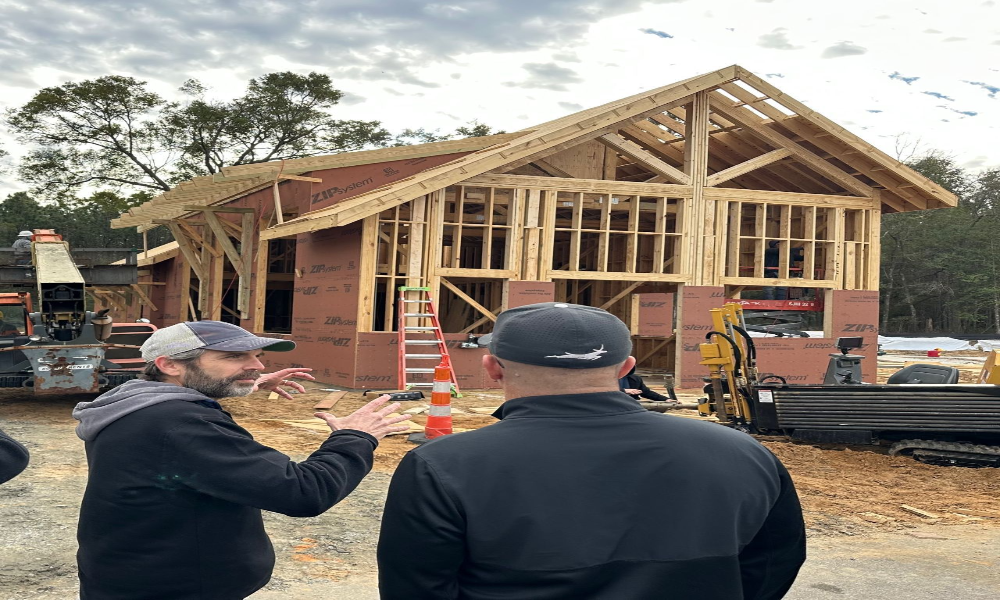
To solve this, the engineering team, led by Harshil Devani and managed by Paul Cattle, PE, designed a suite of strategic “mods.” Instead of relying on the PEMB manufacturer, they engineered a conventional steel mezzanine using RISA Floor, which proved far more cost-effective. They designed a wood-framed entry to add warmth and a “human touch” to the facade. Light gauge walls were engineered using Simpson software to support the brick veneer and Hardie plank, while the elevator shaft was constructed from robust CMU.
The Improvements
The multi-material approach allowed for significant optimization. By using Enercalc to handle the stairs, wood framing, and steel lintels, the team ensured that each component was designed with the most efficient material for its specific job. The use of Smath for seismic weight calculations and the firm’s Key Sheet method in Bluebeam ensured that these disparate systems—wood, conventional steel, light gauge, and CMU—were perfectly coordinated with the PEMB shell.
The Results
Currently in the design phase, the project demonstrates the power of streamlined structural engineering. The Revit drawings, produced by Prakash Kuchhadiya, provide a comprehensive roadmap for a complex hybrid structure. By successfully “modding” the PEMB, the team is delivering a facility that meets the church’s budget without compromising on the features or aesthetics they desire.
Summary
-
This Multi-Purpose Building in Camden, SC, demonstrates how to successfully “mod” a Pre-Engineered Metal Building (PEMB). By integrating a conventional steel mezzanine, wood entry, and CMU elevator shaft, the team transformed a standard metal shell into a custom church gym, utilizing a “Swiss Army knife” engineering approach.