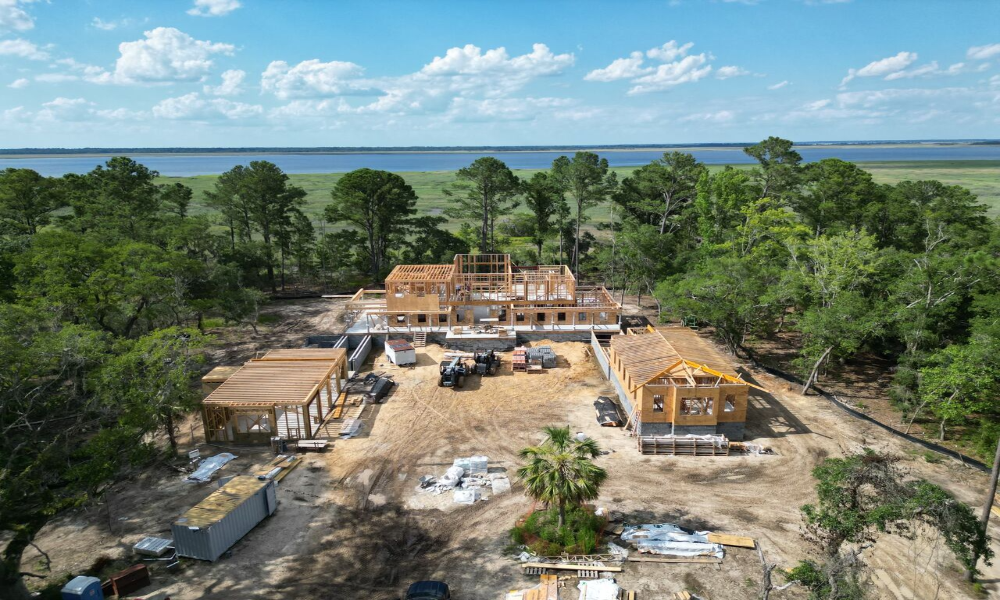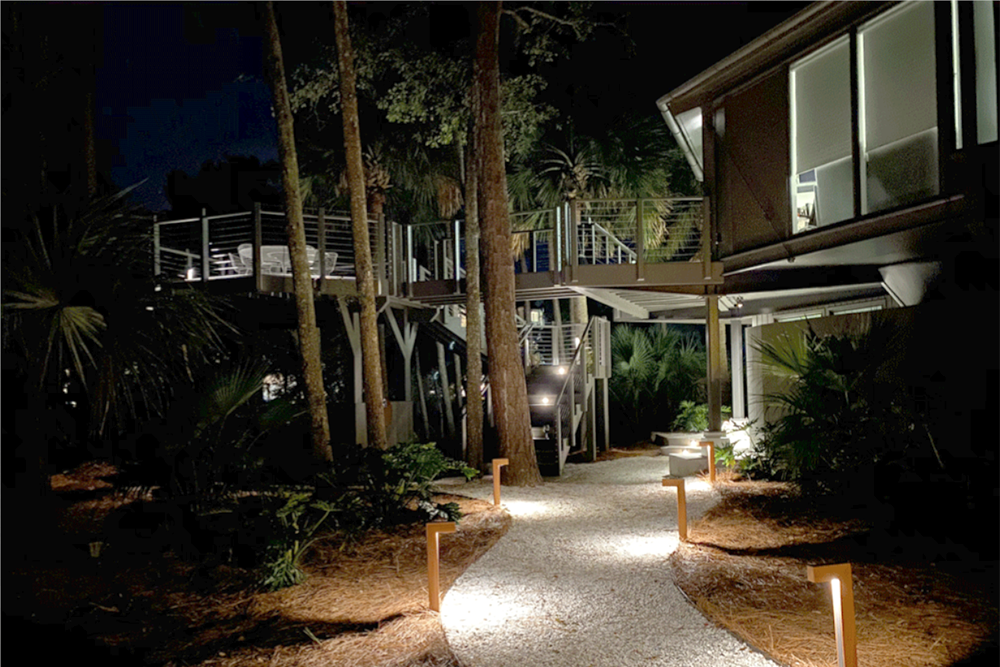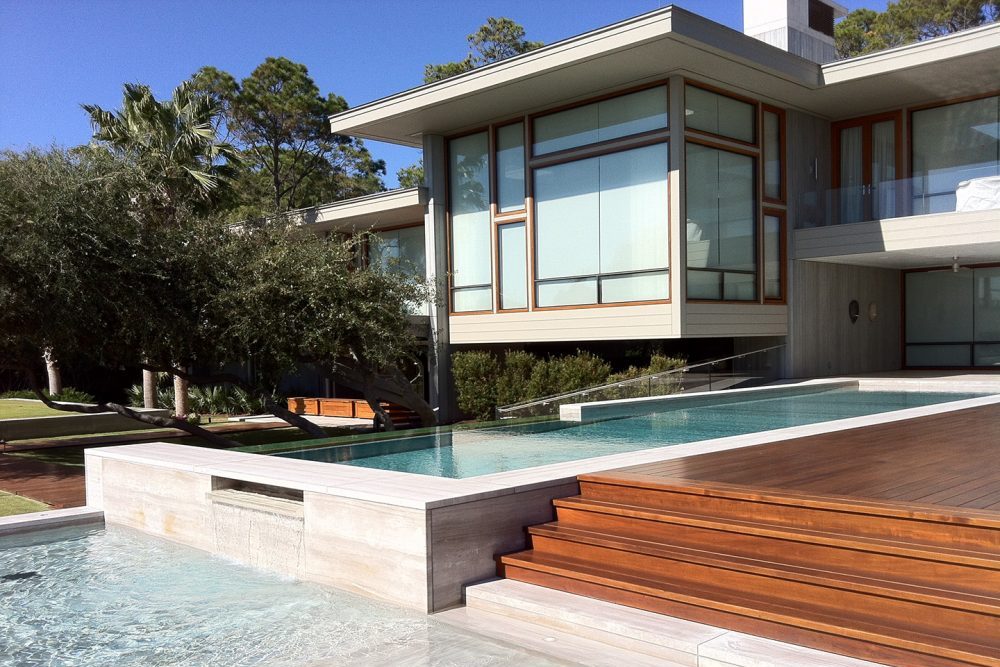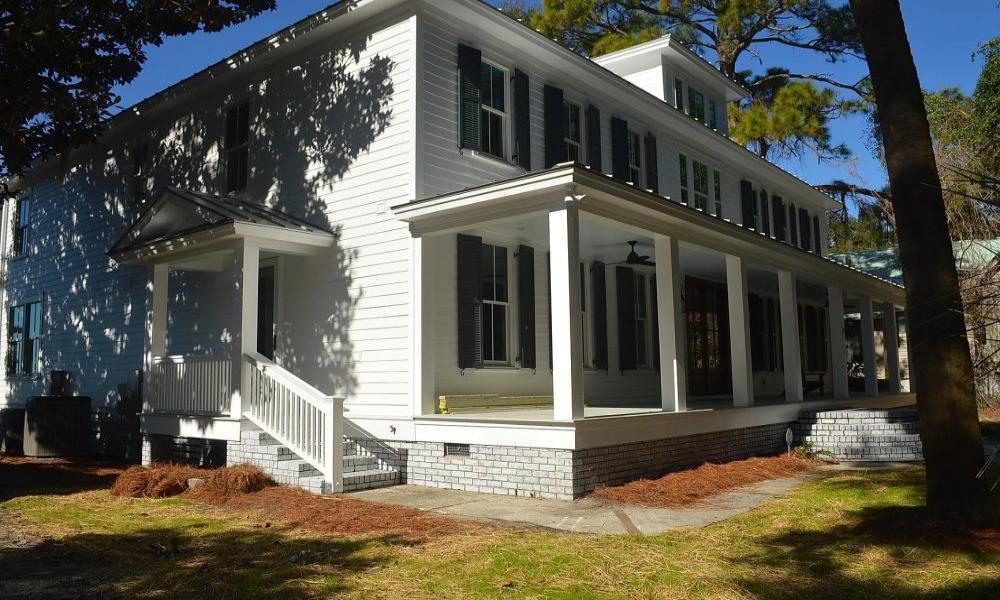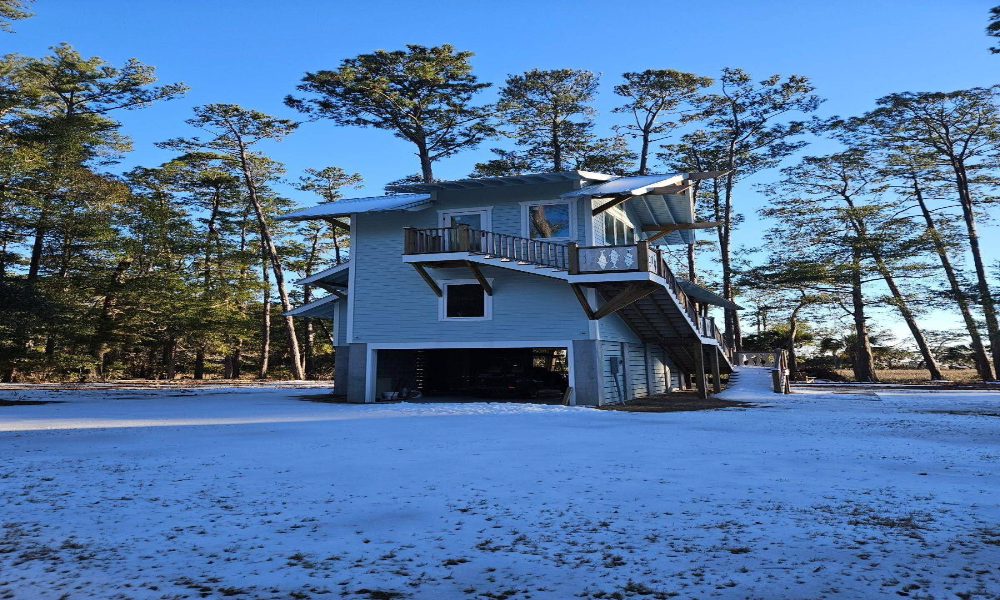
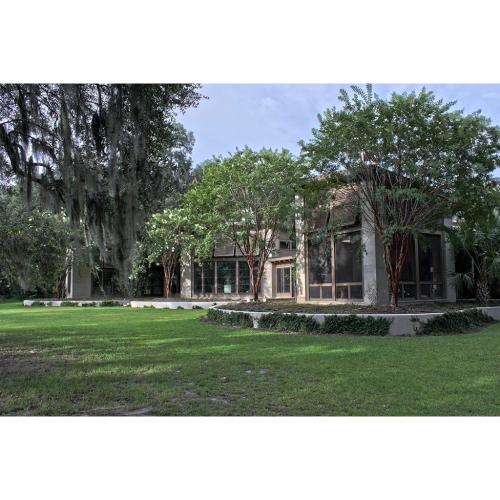
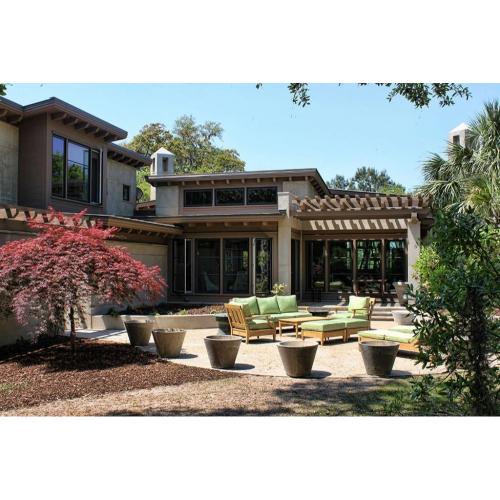
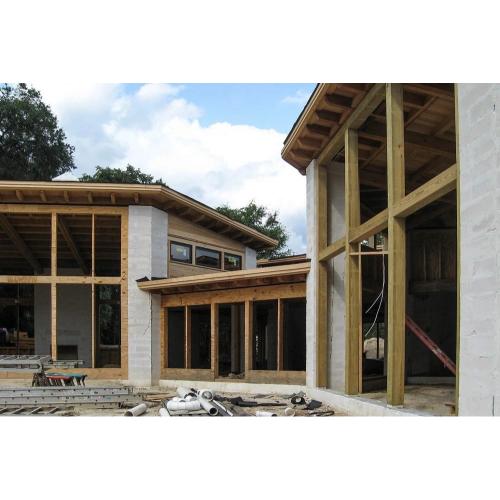
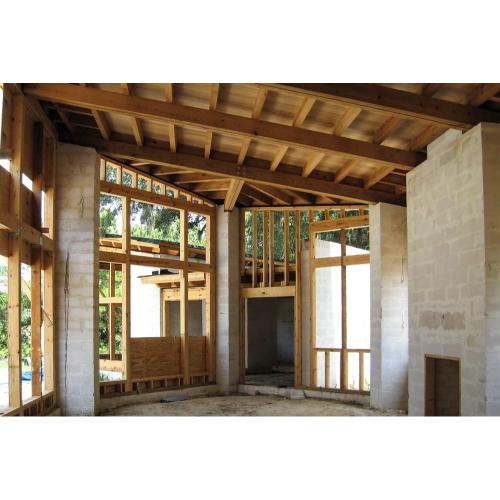
A high-end, wood-framed residence set on Brays Island that combines modern envelope technology with traditional timber roof construction. The home employs AAC (autoclaved aerated concrete) wall construction for a resilient, thermally efficient exterior combined with conventional wood roof framing over a slab-on-grade foundation. The design emphasizes refined detailing, long-term durability, and comfortable, energy-conscious living appropriate to a sensitive island setting.
Excerpt: AAC residence on Brays Island
The design team developed a coordinated assembly that celebrated the strengths of each material. AAC wall panels were tied into the slab with continuous damp-proofing and isolation details to prevent moisture transfer, and movement joints were located and detailed to accept small differential displacements without cracking. At the roof-to-wall interface we specified engineered connectors and a continuous air and weather barrier to transfer uplift loads into the slab and foundations while maintaining a clean exterior edge. Insulation strategies and careful thermal-bridge details were used to exploit the AAC’s insulating and mass properties while ensuring the attic and roof cavities stayed ventilated and moisture-safe. Window and penetration flashings were detailed to the AAC substrate using flexible, compatible membranes and metal copings to preserve long-term watertightness and visual clarity.
The building envelope gained notable thermal performance and durability through the AAC walls’ insulating mass, combined with targeted roof and slab detailing that minimized thermal bridging. Moisture-management measures—damp-proofing at the slab, continuous air barrier at the roof and openings, and controlled attic ventilation—reduced long-term maintenance risk in the humid island climate. Structural connections and engineered anchors provided secure roof anchorage for wind events without intrusive exterior hardware, preserving the residence’s clean lines. Interior finishes and transitions were planned to honor the precision of the enclosure while delivering the high-end experience expected for the project
The completed residence delivers an elegant, durable home that leverages AAC’s performance benefits while maintaining the warmth and aesthetic of a wood-roofed dwelling. The enclosure performs efficiently, yielding comfortable interior conditions and lower anticipated energy consumption. Careful moisture and structural detailing translated into fewer maintenance concerns and a longer service life for the envelope. Visually, the house reads as a refined island residence — contemporary where appropriate but grounded in traditional form and materiality — providing the owner with a comfortable, low-maintenance home suited to the coastal context.
A refined Brays Island residence that pairs AAC wall construction with traditional wood roof framing and a slab-on-grade foundation, delivering a durable, thermally efficient, and high-end home through careful detailing and coordinated material interfaces.