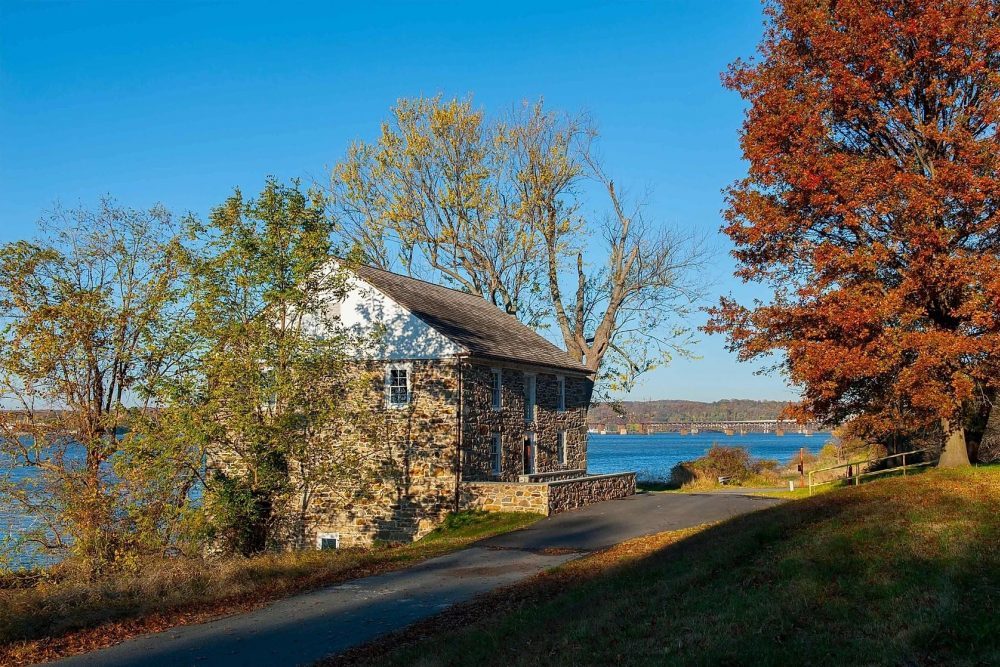
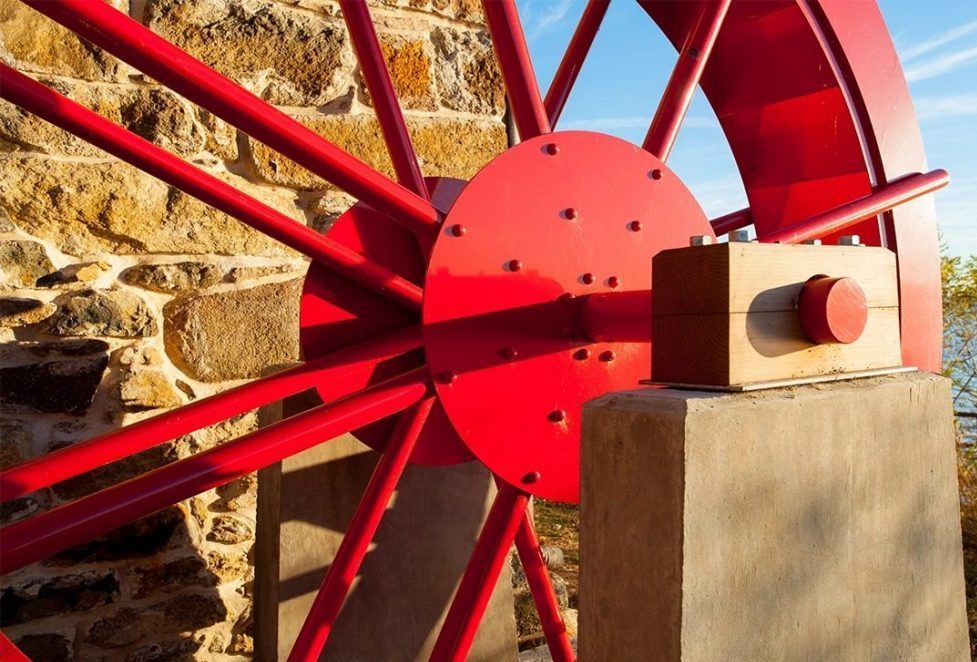
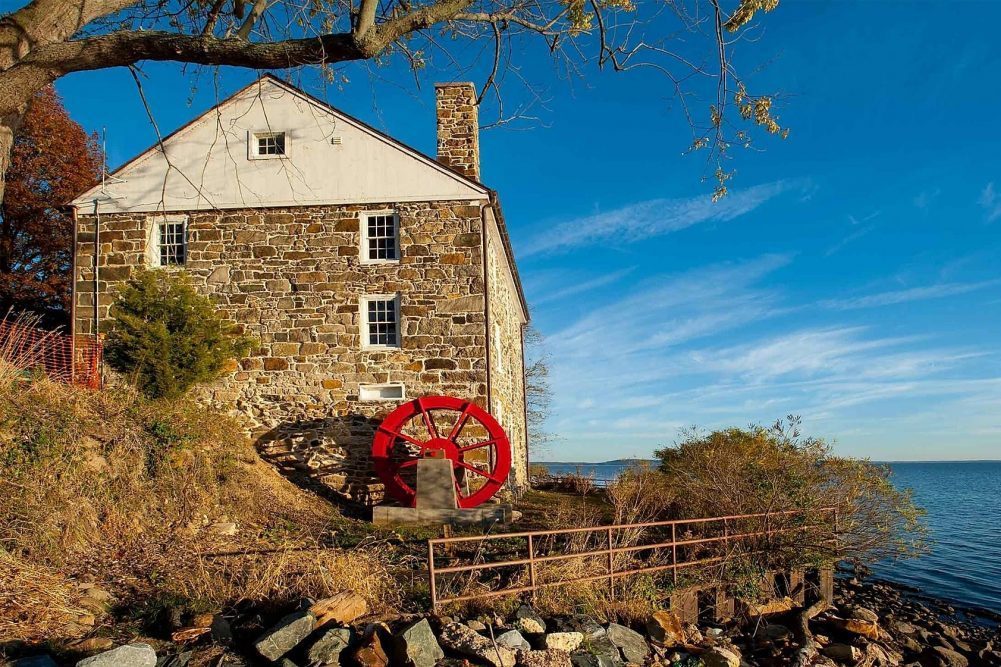
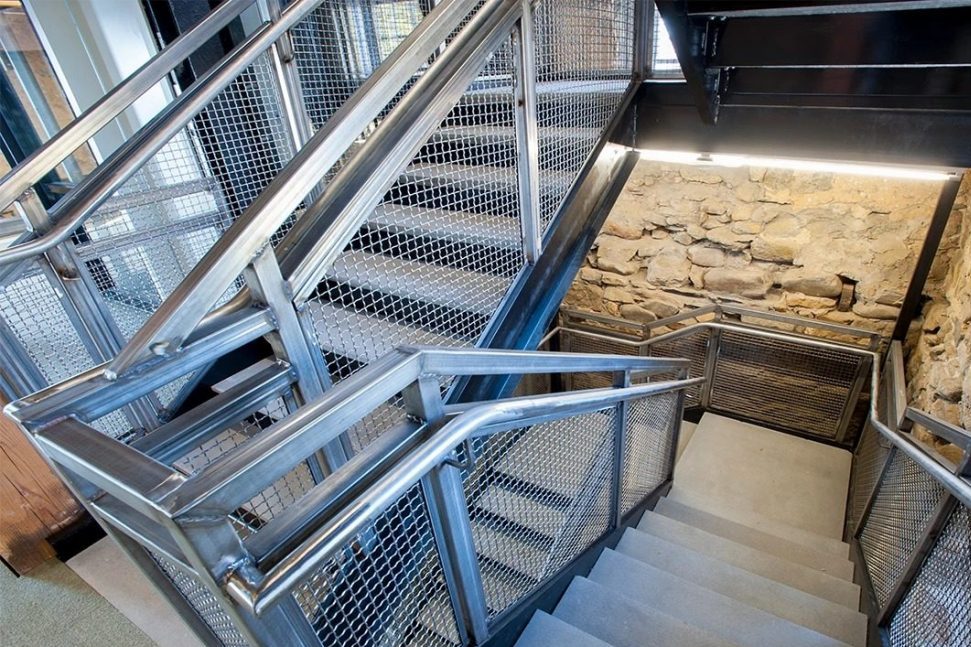
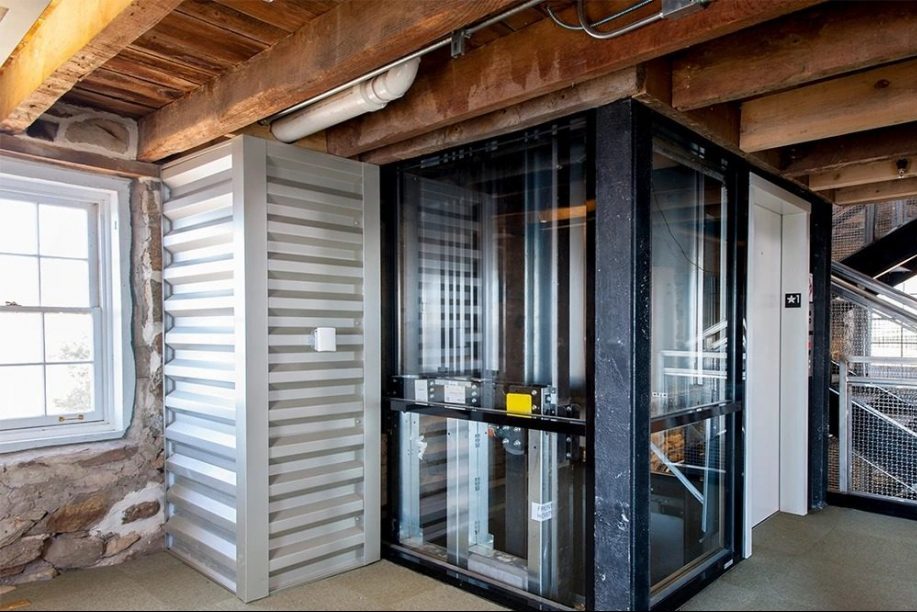
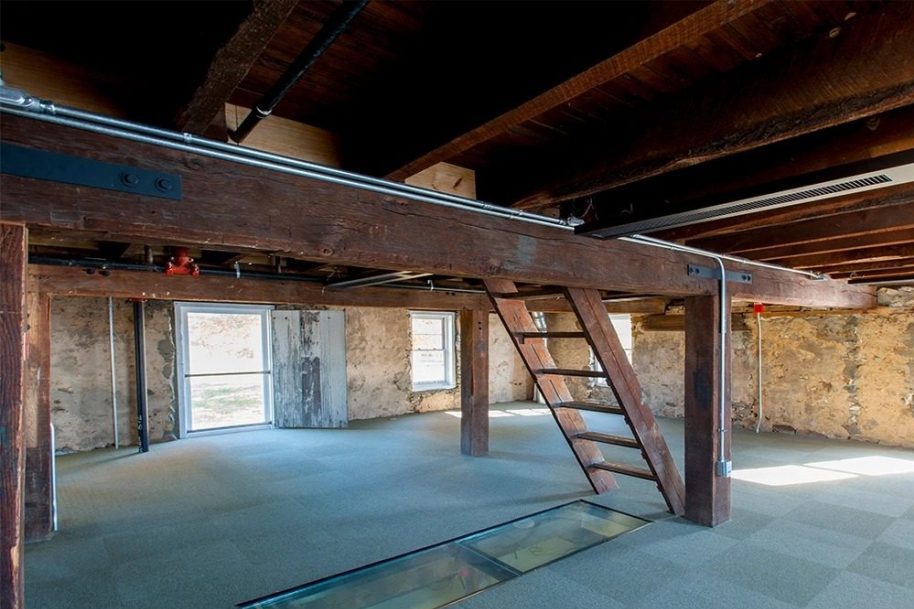
Restoration and adaptive reuse of a historic stone grist mill located on the VA property at Perry Point, Maryland. The original mill—characterized by thick stone walls and heavy timber framing—was structurally stabilized, repaired, and reconfigured so it could be safely used by VA hospital residents for recreational programming. New interventions (including a steel-framed elevator and supporting structure) were introduced to provide universal access and to accommodate modern building systems while keeping the historic character intact.
Deteriorated historic fabric: The stone masonry and heavy timber elements showed age-related damage (mortar loss, water infiltration, and localized timber rot) that threatened structural stability and occupant safety.
Accessibility: The mill’s multi-level interior and historic character provided no accessible route to the lower floor, excluding many residents from use.
Code and systems upgrade: The building needed discreet integration of modern life-safety, mechanical and electrical systems without damaging or visually overpowering historic materials.
Conservation vs. reuse: Delivering new accessible, durable elements while preserving defining historic features required a careful balance and highly specialized craftwork.
Site/logistics constraints: Working on VA property and within an existing historic footprint limited staging, material deliveries, and interventions.
Stabilization-first approach: Began with thorough assessment and targeted structural stabilization—repointing stone masonry with historically compatible mortar and repairing/replacing deteriorated timbers with in-kind heavy timber joinery where necessary.
Concealed modern structure: Introduced steel framing for new elements (including the elevator shaft and selected new floor framing) placed and detailed to minimize visual impact on the historic interior and exterior. Steel members were finished and located to read as subordinate to the original fabric.
Sensitive elevator insertion: A compact, steel-framed elevator was added to provide ADA access to the lower floor; its placement respected primary sight lines and historic circulation routes.
Reversible and compatible interventions: Where replacement was required, materials and detailing were chosen to be reversible/repairable and to match the scale, color, and texture of original materials.
Upgraded systems, discreetly installed: New mechanical, electrical, and life-safety systems were routed through new secondary chases and the steel framing to avoid cutting into significant historic elements. HVAC and lighting were selected for low visual impact and occupant comfort.
Collaborative conservation oversight: Historic preservation consultant Davis Buckley guided treatment decisions to ensure Secretary of the Interior standards–style outcomes (repairs prioritized over replacement; new work differentiated yet compatible).
Structural integrity restored: Repointed masonry, repaired heavy timbers, and selective timber replacement restored the building’s load-bearing capacity.
Full accessibility: Elevator installation and improved entrances/paths allowed wheelchair access to previously inaccessible lower level, enabling inclusive programming.
Usable recreational spaces: Interior layouts were adapted to support multi-purpose recreational activities for VA residents while preserving character spaces.
Durability & maintenance reductions: Modern flashing, improved drainage, and compatible mortars reduced ongoing water-related deterioration and future maintenance needs.
Code compliance & safety: Updated egress routes, fire detection, and lighting brought the facility up to contemporary safety standards without compromising historic fabric.
Activated historic asset: The mill was returned to active use as a safe, accessible recreational facility for VA hospital residents, expanding on-site program options.
Preserved character with modern function: Historic stone walls and heavy timber features remain the defining visual experience; modern additions (elevator and steel elements) are clearly contemporary but visually subordinate.
Extended service life: Conservation and targeted upgrades substantially extended the building’s usable life and reduced near-term repair needs.
Positive client outcome: The VA gained a functional community asset that meets accessibility and safety requirements while honoring the site’s historic significance.
Model for sensitive adaptive reuse: The project demonstrates how careful material selection and concealed structural solutions can reconcile preservation goals with modern accessibility and programmatic needs.
In 2011 BES Design Build, with preservation oversight by Davis Buckley, completed a sensitive restoration and adaptive reuse of the historic stone Grist Mill at Perry Point, MD. The work stabilized and repaired original stone and heavy timber construction, integrated discreet steel framing for new services, and added an elevator to provide ADA access to the lower floor. The result is a preserved historic structure now fully usable by VA hospital residents for recreation—combining authenticity, safety, and accessibility while significantly extending the building’s life.