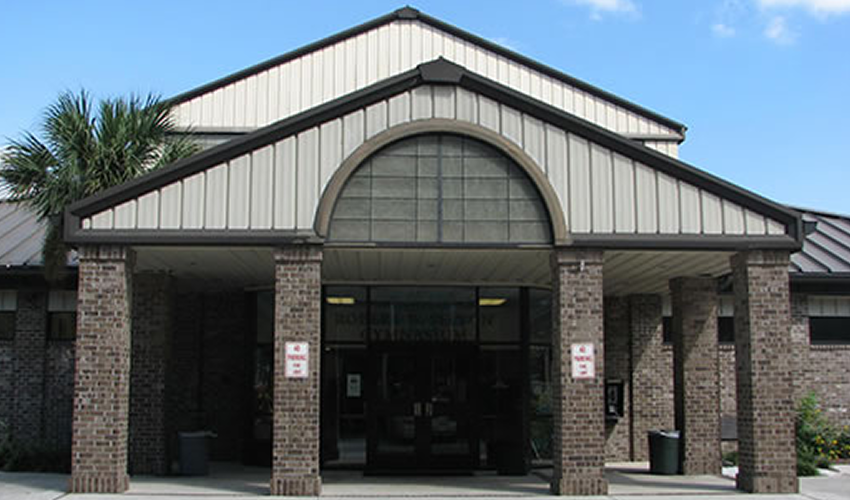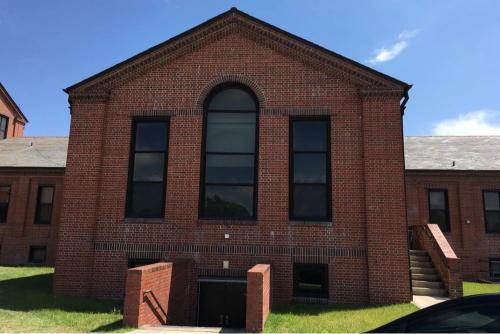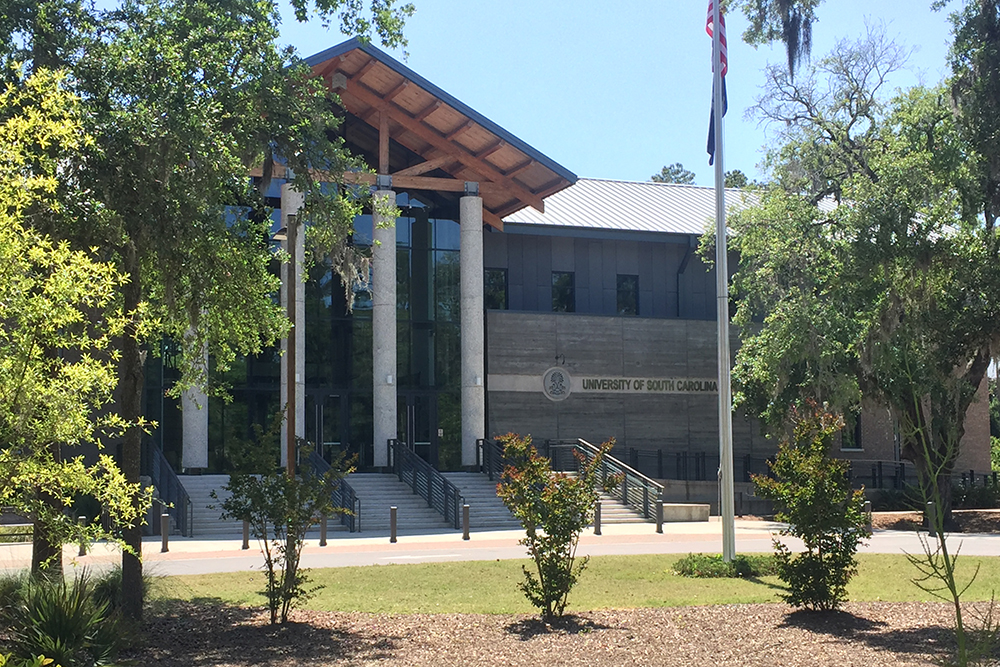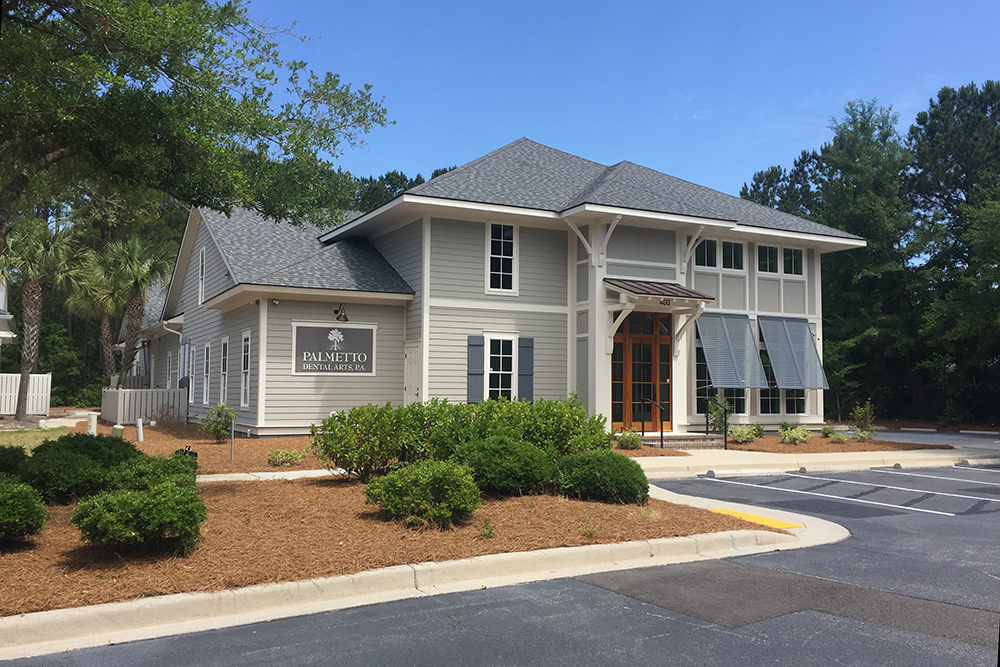
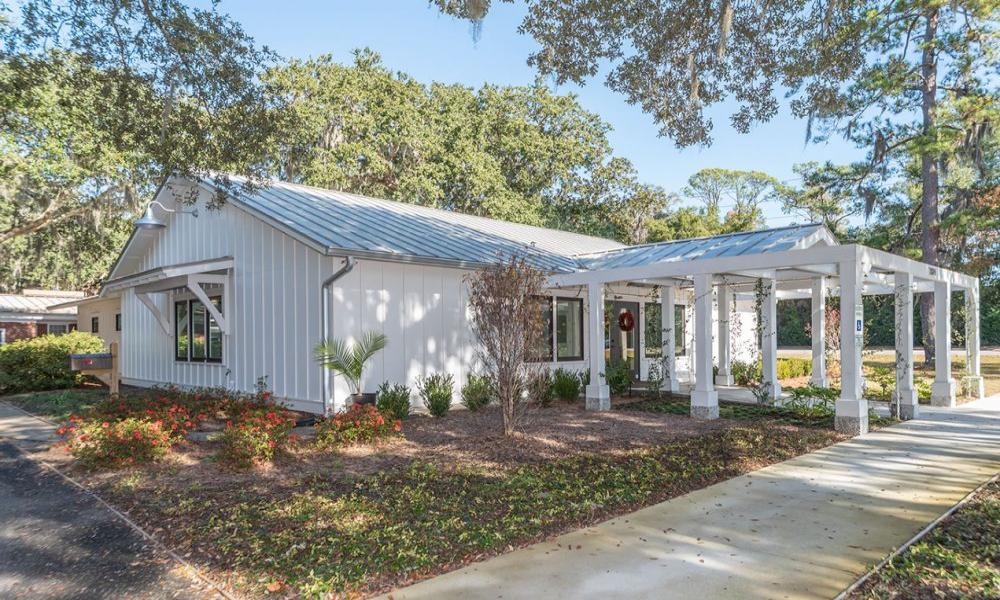
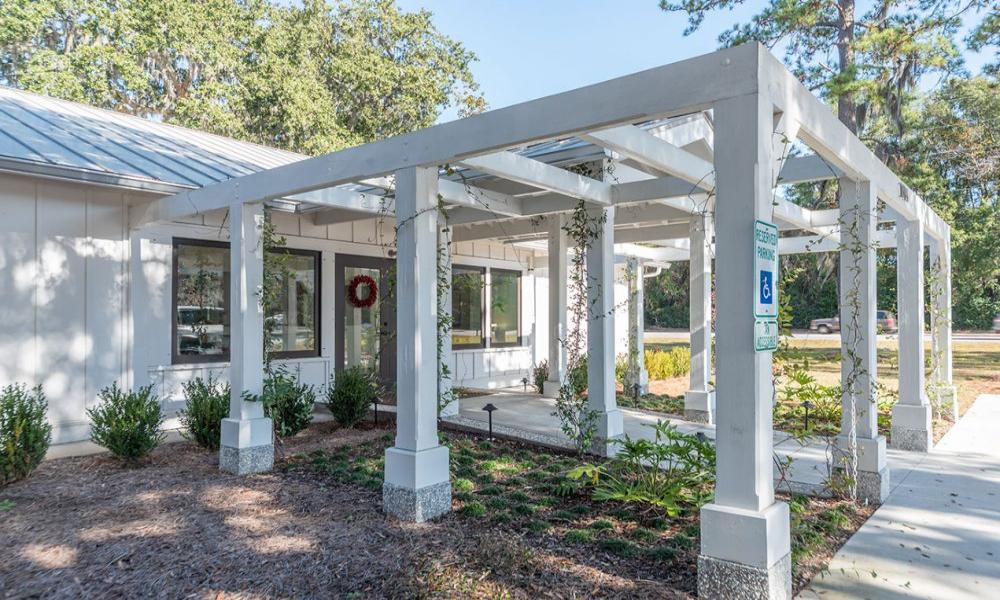
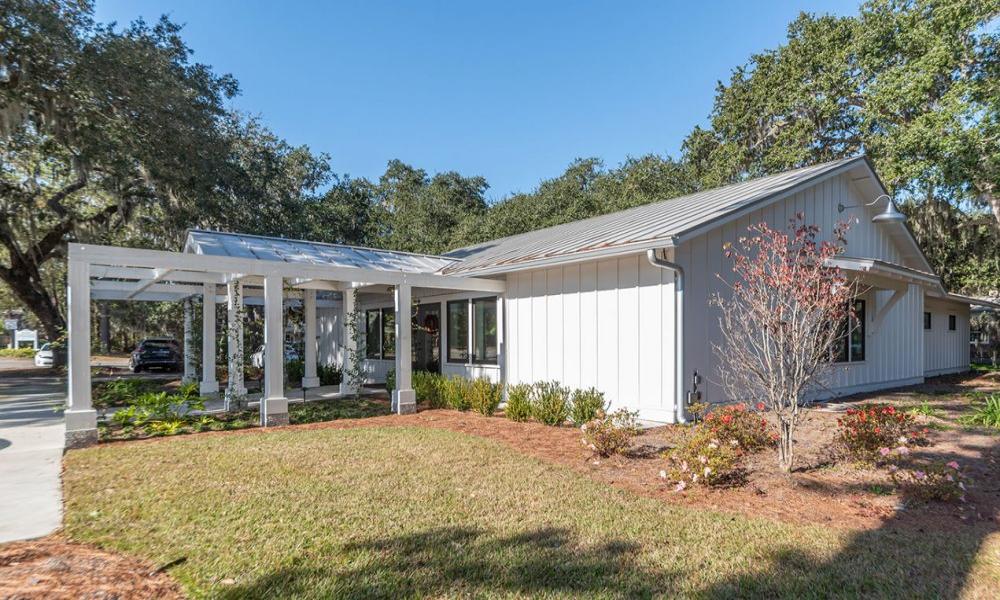
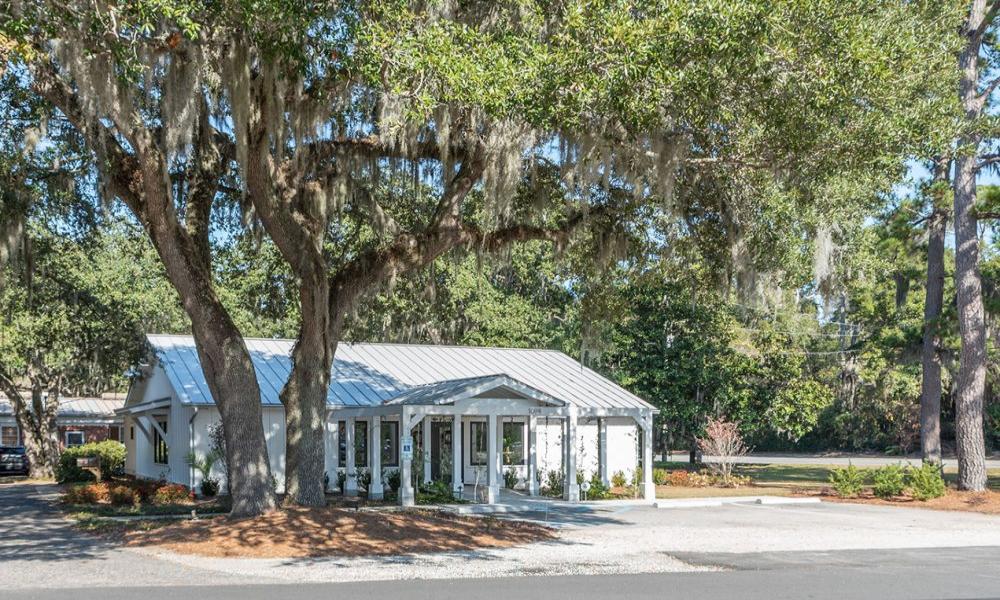
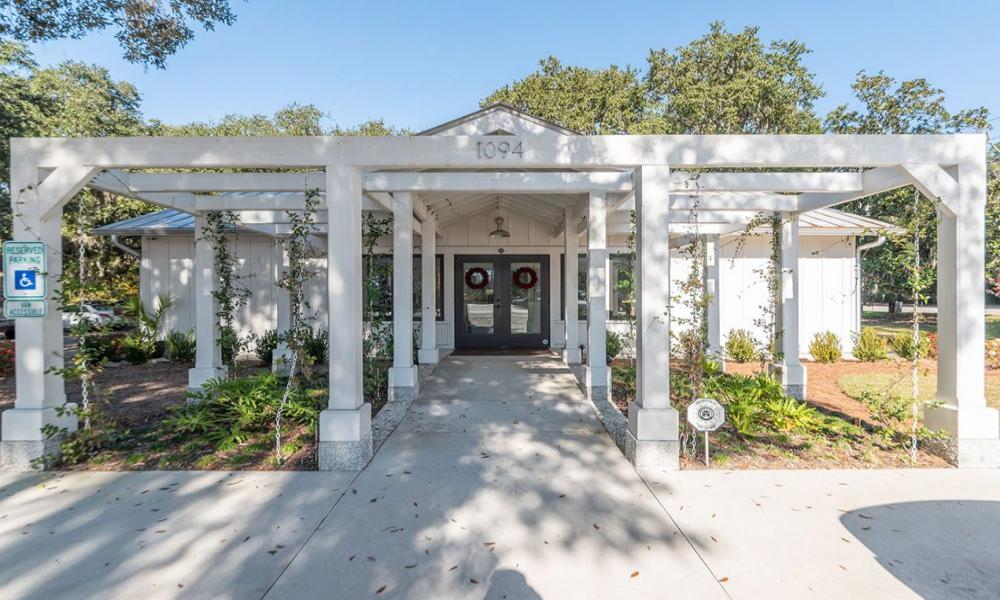
Renovation and adaptive reuse of an existing concrete masonry unit (CMU) building on Ribaut Road, transforming a dated 1970s-era structure into a modern, efficient medical office facility. The project reimagined the original building’s form and façade while retaining its walls and foundation—an approach that demonstrates how thoughtful renovation can embody true sustainability by extending a building’s life cycle and avoiding unnecessary demolition waste.
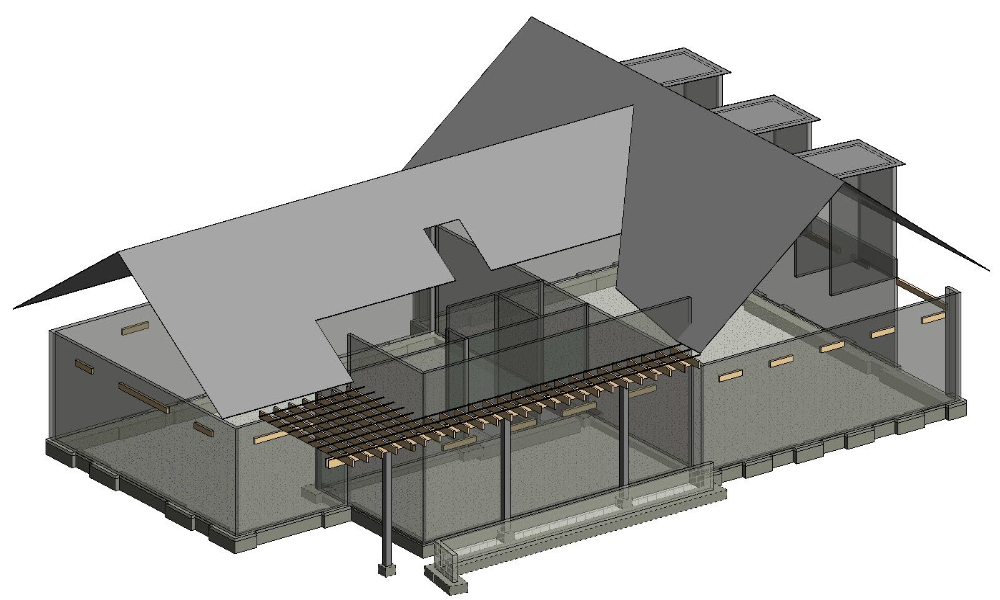
The design team leveraged the existing CMU walls and foundation as the structural backbone, minimizing new construction while upgrading performance. Reinforced openings and select infill walls provided new window and entry configurations for increased daylight and street presence. The façade was re-clad with modern materials and detailing to achieve a clean, contemporary expression. Structural coordination ensured that modifications—such as added canopies, façade extensions, and revised openings—did not compromise the building’s stability. The renovation also incorporated efficient insulation, new glazing systems, and upgraded mechanical and electrical systems to meet modern energy and comfort standards. Collaborating closely with the architect allowed the structural framework to remain efficient and the visual transformation seamless.
The reuse of the existing foundation and walls dramatically reduced embodied carbon and construction waste, aligning with sustainable design principles. Modernized envelope and structural improvements increased thermal performance, daylight access, and occupant comfort. Selective reinforcement allowed for larger glazing areas, creating a brighter, more welcoming environment. Coordination between structure and architecture delivered an improved façade rhythm and enhanced street visibility, reshaping public perception of the once-drab building.
The renovated Ribaut Rd Medical Building stands as a model of sustainable transformation—revitalizing a dated CMU building into a sleek, contemporary facility suitable for medical tenants. The structural strategy preserved valuable embodied energy while enabling architectural freedom to reconfigure and reimagine the building’s form. The result is a cost-effective, durable, and attractive community asset that embodies both environmental responsibility and design renewal.
A sustainable adaptive reuse of a 1970s CMU structure, retaining its foundation and walls to create a modern medical office—transforming a dated shell into a contemporary, efficient, and visually engaging facility.